


I’ve been attempting to read more independent fiction in order to find where the best new stuff is coming from and boost it where I can. I start with the samples, and if they grab me, buy and read the rest of the book. If I don’t like them, I try to be honest and say why I don’t like them. Some are poorly written, give too much exposition, and read like someone explaining a story to me and not reading a story. Others are just not written for me, but you can still tell they are good for people who they are written for.
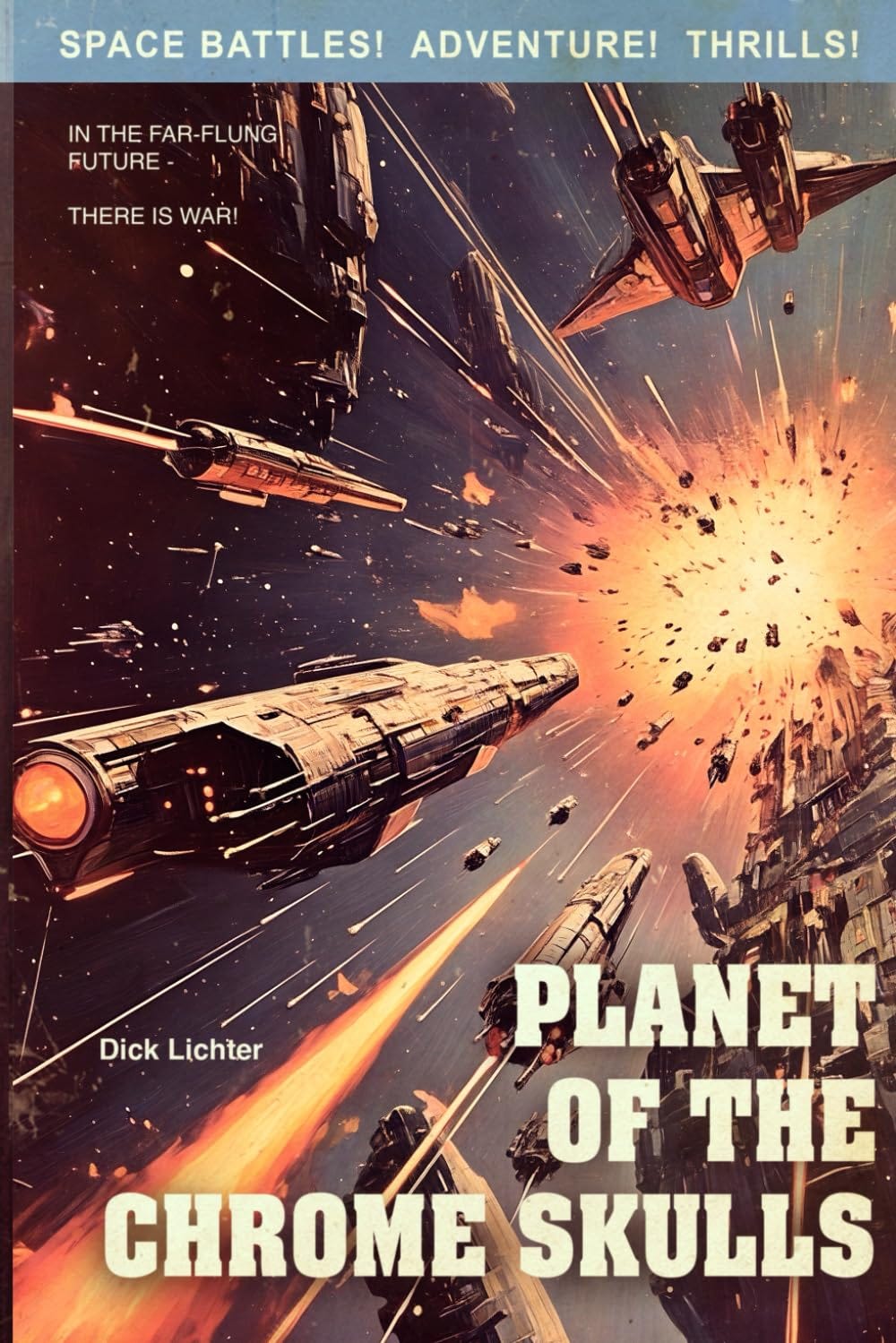
The latest one, Planet of the Chrome Skulls, started with something I understood and am both irritated and not surprised to have read: a disclaimer.
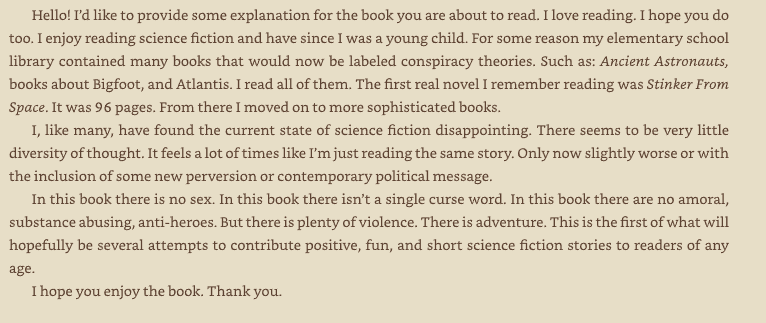
That new authors feel the need to preface their work with a disclaimer (“I’m not like the other girls, I promise”) is something I never expected to see. I assumed books would use their first chapter to bring you into the story, develop an inciting incident, and create a world to get lost in. A disclaimer to assure the reader that they are not about to read diversity DEI slop shouldn’t be needed.
And the worst part is, I get it; I understand.
For a lot of new inventions, new software, or anything that isn’t an established product, one often has to train the audience into understanding what’s happening. Steve Jobs had to do a speaking tour to explain why using your phone for a camera, web browser, and music player was a good thing. Microwaves required a mass media campaign to assure people they weren’t giving off radiation poisoning if you stood too close to the doorway. I can only imagine what fluoride companies had to do to get people to trust the water supply.
So I’m not surprised that writers feel compelled to assure the audience that they can read about an adventure, and that it will not be about a plucky group of upper-middle-class lesbians with blue-haired slicked-back undercuts who use the power of diversity and anti-racism to defeat the second coming of the Third Reich; aka a white man who owns a business and goes to church or something.
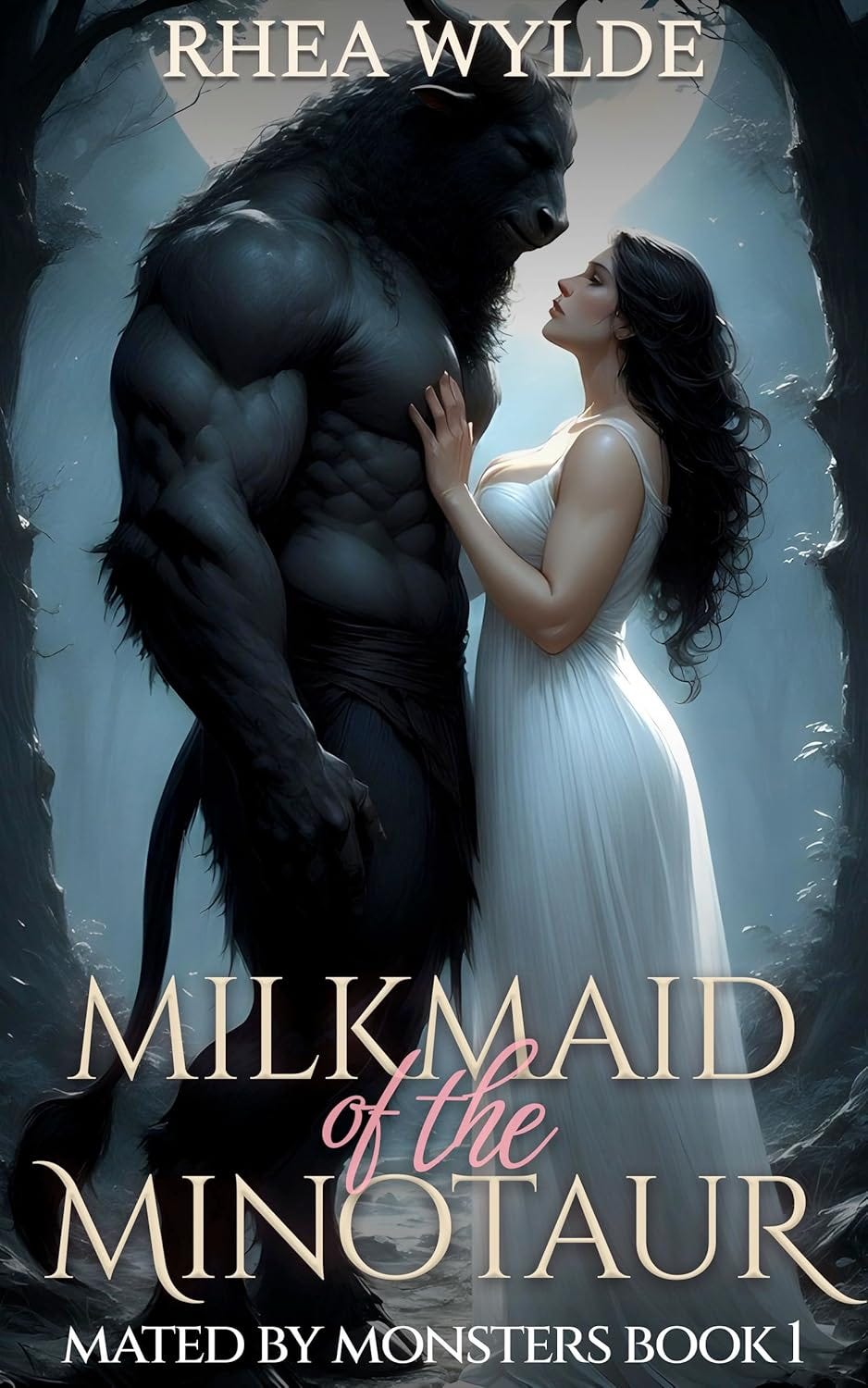
Should new authors be doing this? Do we need to train an audience to understand that a story that isn’t full of a job board for medieval mercenaries rolling d20s for gold coins, or a love story of a bland, boring spreadsheet woman who falls for a well-endowed minotaur, can still be a classic story for a socially calibrated and emotionally stable human reader?
I don’t know how the industry will look in the next decade, but the optimist in me hopes that “Hey, no one is fucking a donkey in this story; you won’t know if anyone is a lesbian or a downtrodden minority on the tail end of slavery reparations either, but you can read it and enjoy a few hours” is the kind of thing that will encourage people to read the 2007 iPhone of stories, and not AI bean-flicker litRPG slop we have now.
Unfortunately, I suspect that disclaimers will be more frequent.
I’ve been trying to read more indie fiction to find promising new writers and promote them when I can. I usually start with samples, and if they hook me, I buy the book. Lately, though, I’ve been running into stories that open with disclaimers; little preemptive apologies or promises that the book isn’t woke, political, or trying too hard to be diverse.
It bothers me, but I also understand why it’s happening. Just like new technologies once needed public education to gain trust, authors now have to “train” readers to expect straightforward storytelling again.
Still, I wish stories would just tell stories without prefacing themselves. Unfortunately, I think these disclaimers are going to become more common as the culture around writing keeps fracturing.
It’s not new
Films in the ’30s and comics in the ’50s had similar moments, which coincidentally happened before their respective golden ages:
For example, cinema was still seen as lowbrow and morally suspect in the 1900s. Studios added short text cards or public statements to assure audiences that the story had a moral lesson and wouldn’t corrupt children. Films like The Public Enemy (1931) and Scarface (1932) opened with title cards explaining that the movie condemned crime rather than glorified it. These reassured audiences who were suspicious of Hollywood’s influence.
And you know how Batman doesn’t kill? That was an example of the moral panic over violence and immorality in comics. Publishers created a Comics Code Authority stamp on covers to prove they met standards of decency. The result was decades of self-censorship, sanitizing stories to reassure parents and moral crusaders.
And there’s more: films of the ’50s assuring audiences they weren’t pinko propaganda, media in the 2010s giving trigger warnings. So the priming of audiences isn’t new, hasn’t gone away, and might be a saving grace.
So should authors assure people that they aren’t reading DEI propaganda in the new best-selling novel? Every time an art form loses cultural trust or becomes politicized, creators start using disclaimers to signal what kind of story they’re about to tell and what ideology it represents. It’s a cycle that repeats whenever the cultural gatekeepers and the consumers fall out of sync.
And judging by what is selling and the dismal state of traditional publishing, it’s definitely a case of consumers and writers being out of sync.
Hopefully, the audience catches up and the disclaimers disappear. Pulp novels turned into the backbone of modern genre fiction. Early film disclaimers gave way to artistic freedom after the Hays Code collapsed.
Disclaimers may vanish once readers learn to trust small, individual voices again instead of cultural institutions. Hopefully, we are in the grindhouse stage of indie fiction: scrappy, uneven, defensive, but vital. If I’m right, we’re in the growing pains of a new golden age and not a gilded one.
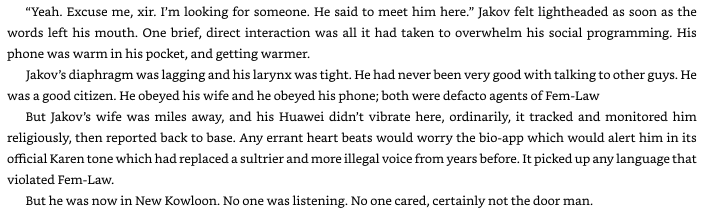
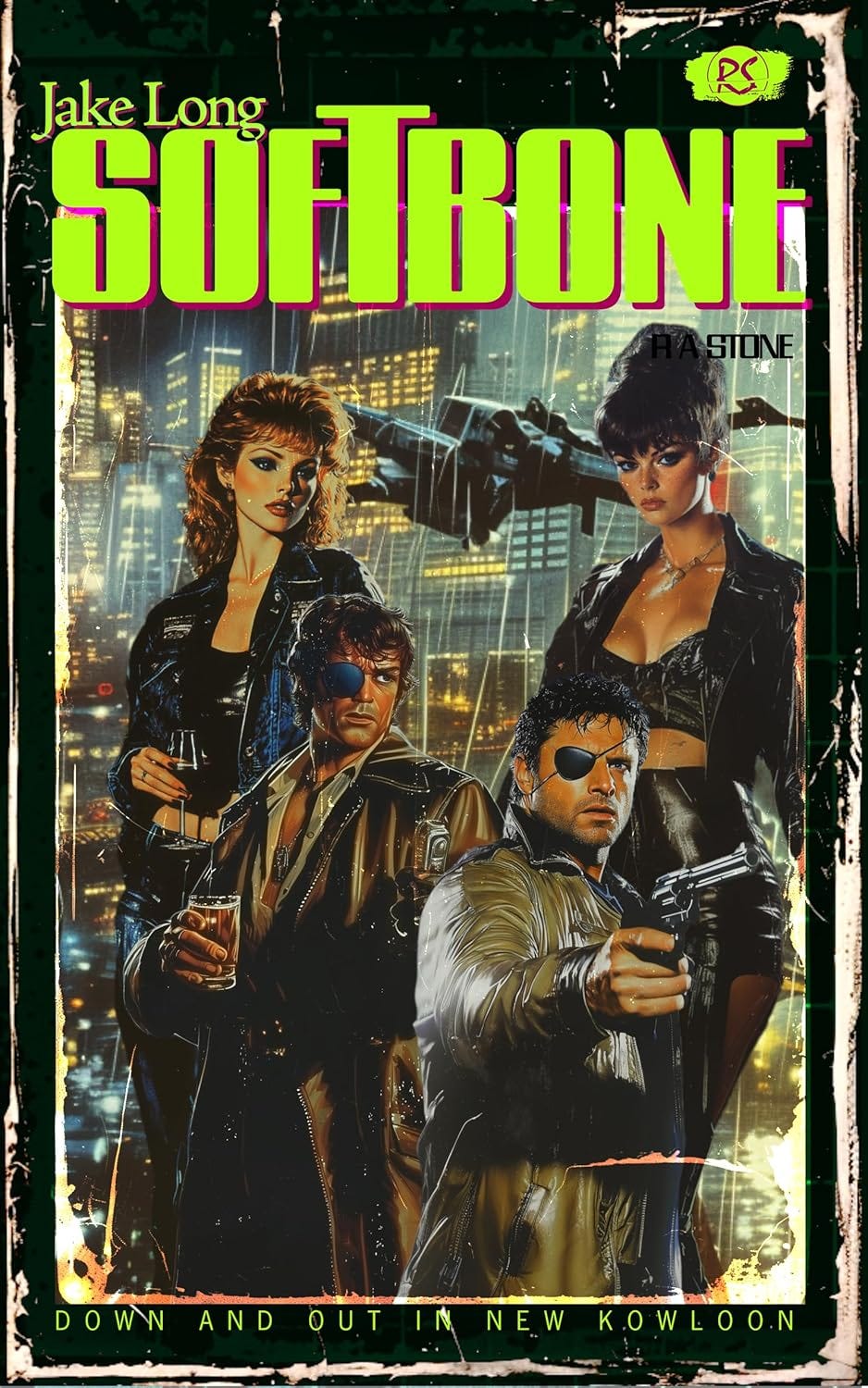
I, unfortunately, did not. I led with a first chapter of an unacceptably crass and unapologetic story of cyberpunk satire, taking the piss out of all of it. Dick Lichter is adding a disclaimer. You tell me what it would take to make you trust the next game, book, movie, or TV show in 2025.
Omg that disclaimer. It’s giving “Empress Theresa” vibes. You’re being much more generous than I am going to be. I think you hit it right with the knot like other girls tendency. With the popular trend of smut and grossness in literature, it honestly isn’t restricted to Indie books and most readers don’t target indie books to read. If they read indie books at all, they don’t know that they’re Indie. So for me, this is her being such a special girl. Which is annoying.